____________________________________________________________________________________
| Home / Wheel Loaders / Caterpillar Wheel Loaders / Cat 906H2 |
Caterpillar 906H2 Troubleshooting
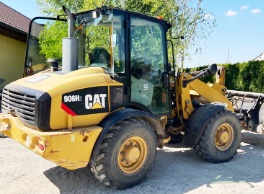 The
Caterpillar 906H2 compact wheel loader is powered by 203.1 cu.in (3.3L)
Caterpillar C3.3B DIT 4-cylinder turbocharged liquid-cooled diesel engine with a
rated power of 69 hp (52 kW) at 2400 rpm. The Cat 906H2 is equipped with a
hydrostatic transmission, articulated steering system, hydraulic wet disc
brakes, and 405/70R18 standard tires. The closed center hydraulic system has a
piston pump with fluid flow rate of 22 gpm (83 lpm) or 33 gpm (125 lpm). The
wheel loader has a rated operating capacity of 3483 lbs (1580 kg) and tipping
load of 6967 lbs (3160 kg). The maximum lift height is 127.1" (3230 mm) to hinge
pin, and bucket breakout force is 9440 lbs (4290 kg).
| Engine Troubleshooting |
Engine difficult to start or will not start
Air in fuel system - Bleed fuel system.
Fuel filter plugged - Service or replace the filter.
Dirty or faulty injection nozzles - Clean or replace injection nozzles.
Dirt or water in fuel system - Drain water or flush dirt from the system.
Valve clearance is out of adjustment - Adjust valve clearance according to specifications.
Fuel injection pump is faulty - Install a new fuel pump or repair.
Engine starts and then shuts off
Clogged air cleaner - Install new air cleaner element.
Clogged fuel filter - Replace filter element.
Problems with fuel injection pump tightness - Inspect fuel injection pump for leaks.
Defective or clogged fuel injectors - Test and replace fuel injectors if necessary.
Fuel injection pump is faulty - Repair or replace injection pump.
Engine stops running suddenly
Engine is not fully warmed up - Warm up to required temperature.
Fuel filter plugging - Clean the filter or install new filter element.
Air in the fuel lines - Bleed the fuel lines.
Dirty or damaged injection nozzles - Replace injection nozzles.
Fuel injection pump timing is wrong - Adjust the pump as required.
Engine stalls at idle
Incorrect low idle setting - Adjust low idling as recommended.
Fuel injection pump is broken - Replace injection pump or repair it.
Fuel injector fault - Inspect fuel injectors and change as required.
Excessive valve clearance - Adjust valve clearance according to specifications.
Loss of engine power
Plugged air filter - Clean or change filter.
Faulty or dirty injection nozzles - Clean or change injection nozzles.
Insufficient fuel injection pressure - Correct the pressure settings.
Excessive valve clearance - Correct valve clearance.
Wrong adjustment of low idle speed - Adjust low idling as recommended.
Fuel hoses or lines clogging - Clean fuel hoses and lines.
Worn cylinder head gasket - Install new cylinder head gasket.
Piston rings are worn or damaged - Install new piston rings.
Engine is overheated
Not enough coolant - Fill the cooling system and check components for leaks or other faults.
Engine oil level is insufficient - Check oil level and add oil as required.
Dirty radiator fins or faulty radiator cap - Clean radiator or replace cap.
Loose or damaged fan belt - Change as required.
Engine overloaded - Load reducing required.
Insufficient oil pressure
Oil level is insufficient - Check oil level and add oil as required.
Engine oil filter is plugged - Clean or change engine oil filter.
Incorrect oil viscosity - Use oil of proper viscosity.
Crankshaft bearing has excessive oil clearance - Replace bearings.
Oil pump malfunction - Inspect and change as required.
Engine noises or knocks
Low engine oil level - Checking oil level and add if necessary.
Low coolant temperature - Warm up the engine.
Improper fuel injection timing - Set up as recommended.
Low idle speed setting is incorrect - Adjustment required.
Fuel injectors are dirty or defective - Inspect fuel injectors and change as required.
Connecting rod is not aligned or defective - Connecting rod needs to be replaced or aligned.
Scored or worn pistons - Pistons need to be replaced.
| Hydrostatic Transmission Troubleshooting |
Hydrostatic transmission makes excessive noise
Dirty transmission fluid or insufficient fluid level - Add fluid to the correct level or fill the transmission with fresh fluid.
Speed control linkage is worn or unadjusted - Adjust or replace linkage.
Stuck relief valve - Replace relief valve.
Excessive transmission load - Reduce loading.
Defective or worn transmission parts - After disassembly and inspection, replace defective components.
Loss of power
Lack of transmission oil supply - Fill the transmission housing with oil.
Relief valve failure - Change the valve.
Speed control linkage is worn or unadjusted - Adjust or change linkage.
Transmission oil over heats
Transmission oil insufficient - Check and refill the transmission oil.
Clogged transmission oil filter element - Clean or replace the transmission filter.
Damaged or clogged cooling components - Check all cooling components and repair or change if required.
Transmission overloaded - Load needs to be reduced.
External fluid leaks
Damaged gaskets or seals - Change defective gaskets or seal.
High internal transmission housing pressure - Replace worn components.
Oil return tube is plugged - Clean or replace the tube.
| Hydraulics Troubleshooting |
Hydraulic system overheating
Hydraulic pressure is not adjusted correctly - Hydraulic pressure must be set correctly.
Main relief valve failure or improper setting - Set up or change the relief valve.
Hydraulic oil contamination - Change hydraulic oil.
Not enough hydraulic oil in the system - Fill up the hydraulic oil.
Worn hydraulic oil pump - Repair or install new hydraulic pump.
Lift arm won't raise or lower
Lift controls are damaged - Change or repair.
Damaged hydraulic oil pump - Repair or replace pump if necessary.
Faulty hydraulic control valve - Replace or repair the valve.
Hydraulic cylinder malfunction - Install a new boom cylinder or repair it.
Hydraulic oil level low - Check and refill the hydraulic oil.
Bucket does not tilt
Bucket controls are faulty - Repair or replace.
Defective hydraulic pump - Repair or install new hydraulic pump.
Hydraulic control valve malfunction - Install a new valve or repair it.
Defective bucket cylinder - Repair or change cylinder.
Low hydraulic fluid level - Fill up the hydraulic fluid.
Bucket or lift arm is working slowly
Hydraulic pump is defective - Test pump flow rate and replace pump if required.
Hydraulic cylinder oil leakage - Change cylinder piston seals.
Hydraulic fluid is insufficient - Add fluid as required.
Hydraulic control valve is defective or set improper - Repair or set properly.
Hydraulic system loosing pressure - Correct adjustment is required.
Jerky operation of the bucket or boom
There is air in the hydraulic system - Bleed air from system.
Hydraulic oil filter element clogging - Replace or clean the filter.
Contaminated hydraulic oil - The oil must be changed.
Scratched cylinder rod or tube - Replace worn component.
Hydraulic pump makes excessive noise
Hydraulic leaks or lack of oil - Add hydraulic oil or correct system leaks.
Hydraulic filter clogging - Service or change hydraulic filter.
Suction line clogging - Need to service the suction line.
Air in hydraulic pump - Bleed air.
Pump parts are faulty - Install new hydraulic pump or rebuild it.
| Electrical Troubleshooting |
Battery does not charge
Loose or corroded wire connections - Tighten or service cable connections.
Battery terminal clamps are faulty - Replace terminal clamps.
Battery faulty cell - Install a new battery.
Belt is loose or defective - Adjust belt tension or change the belt.
Starter cranks slow
Low battery output - Low battery charging, charge as required.
Battery discharges quickly - Service charging system or install new battery.
Disconnected cables or faulty battery terminals - Connect cables properly or replace terminals.
Starter doesn't crank
Battery is drained or defective - Replace or charge as required.
Battery wiring is disconnected or improperly connected - Inspect wiring and connect as required.
Low battery voltage - Battery is drained, charge it.
Starter motor is damaged - Starter should be replaced.
____________________________________________________________________________________
____________________________________________________________________________________
| WHEEL LOADERS SPECIFICATIONS |
Bobcat
Caterpillar
Case
Doosan
John Deere
Kubota
Hitachi
Komatsu